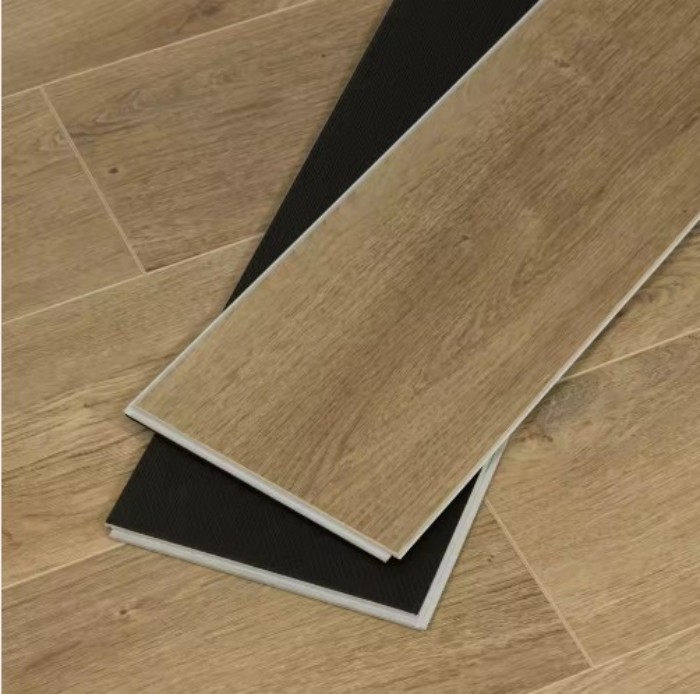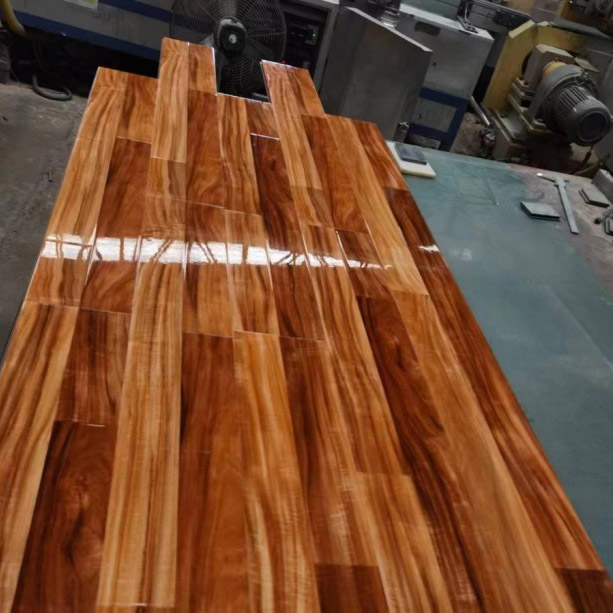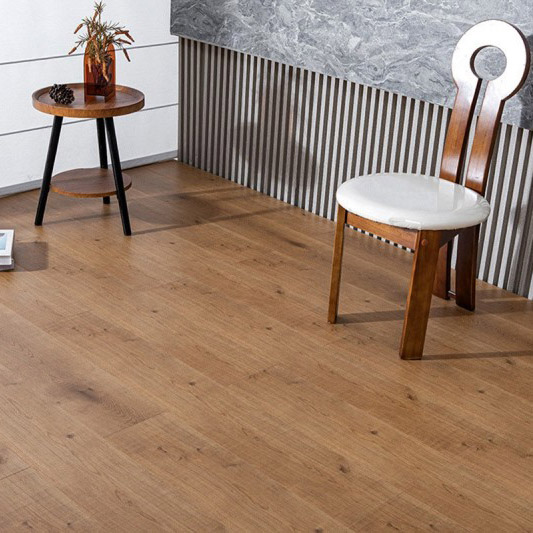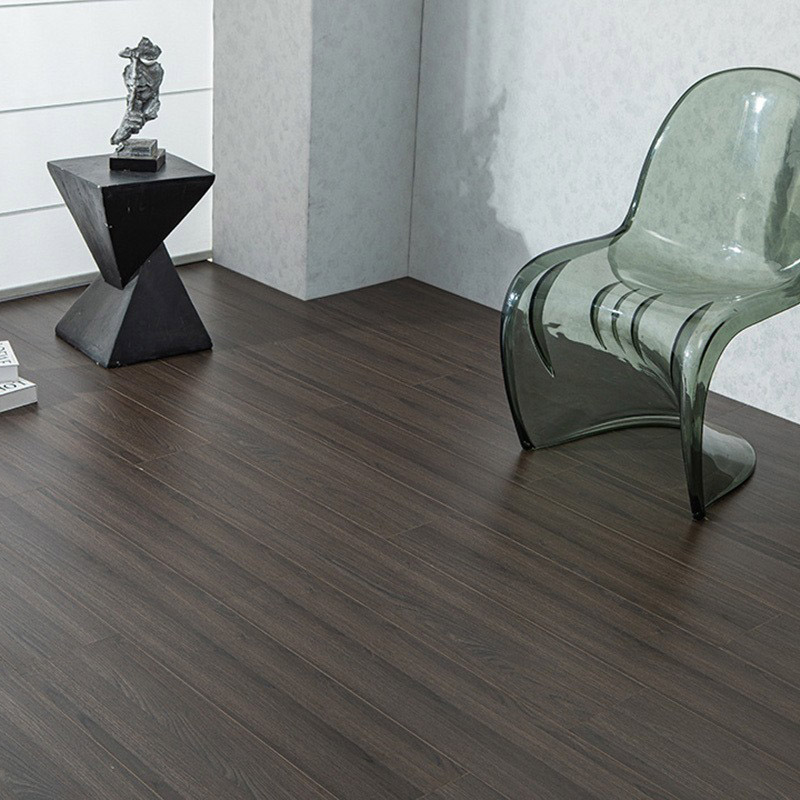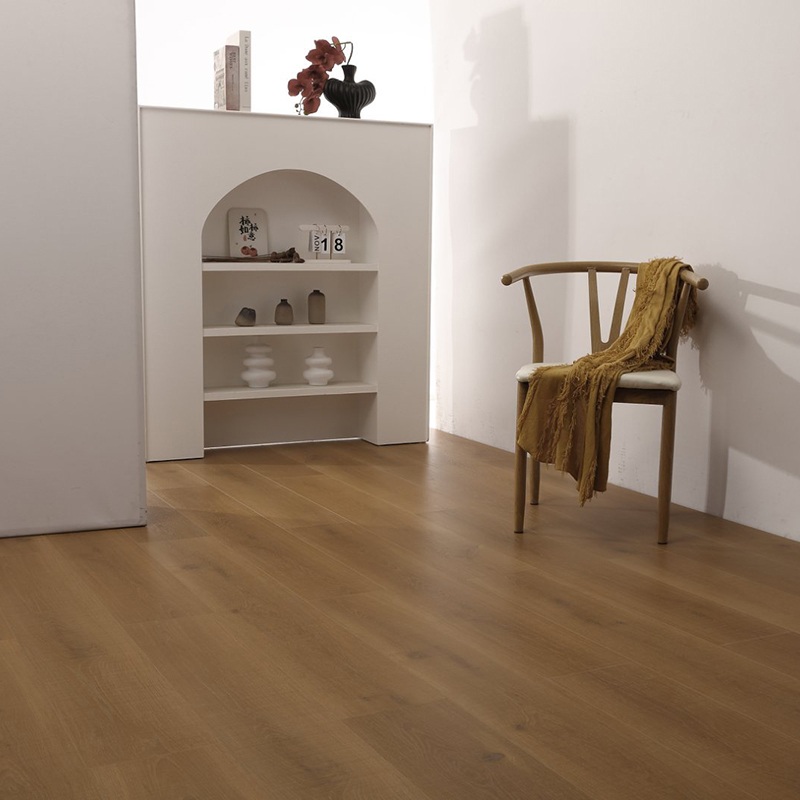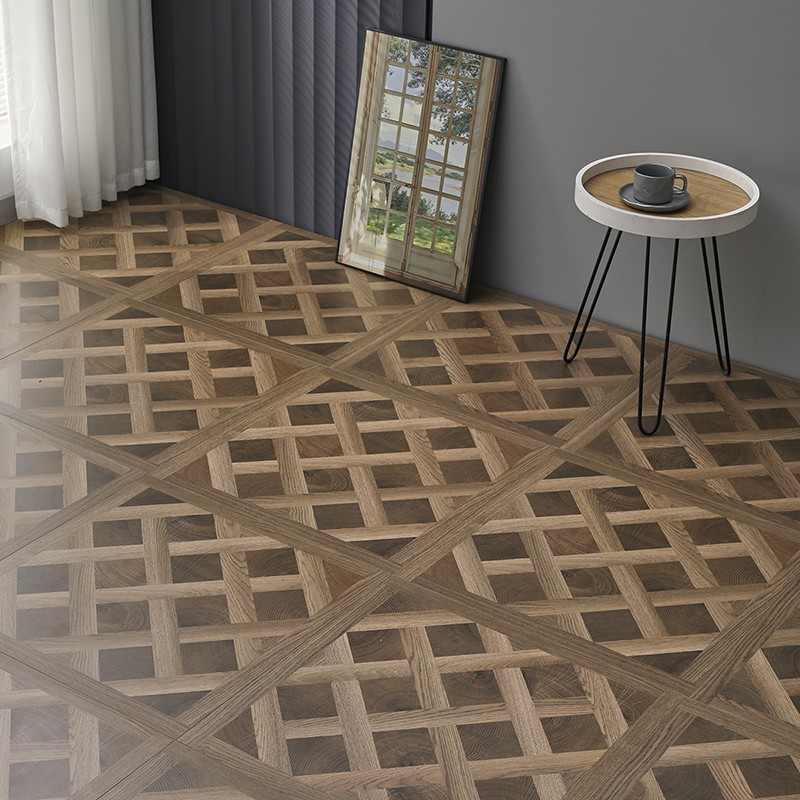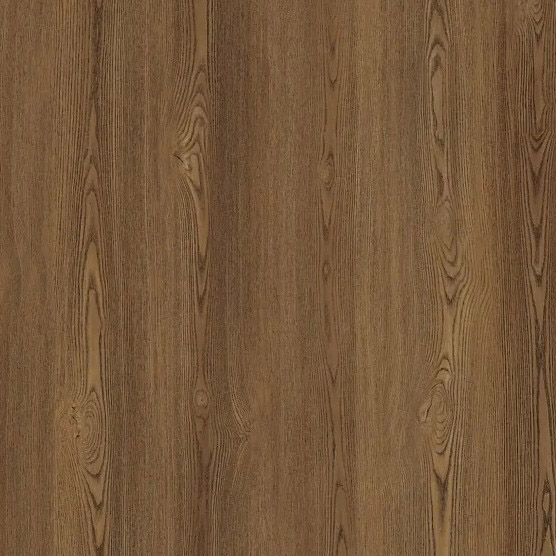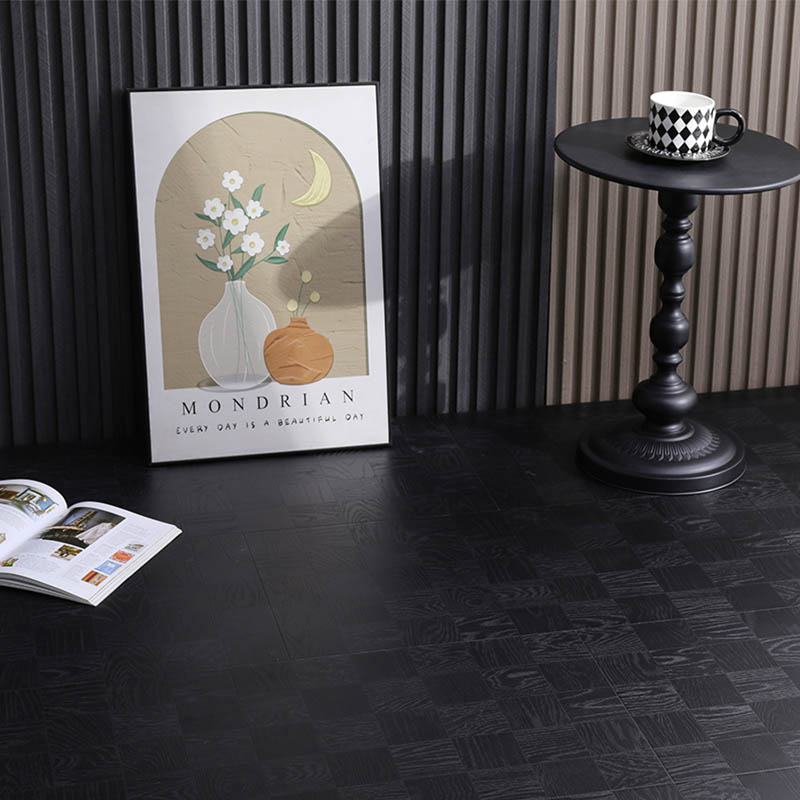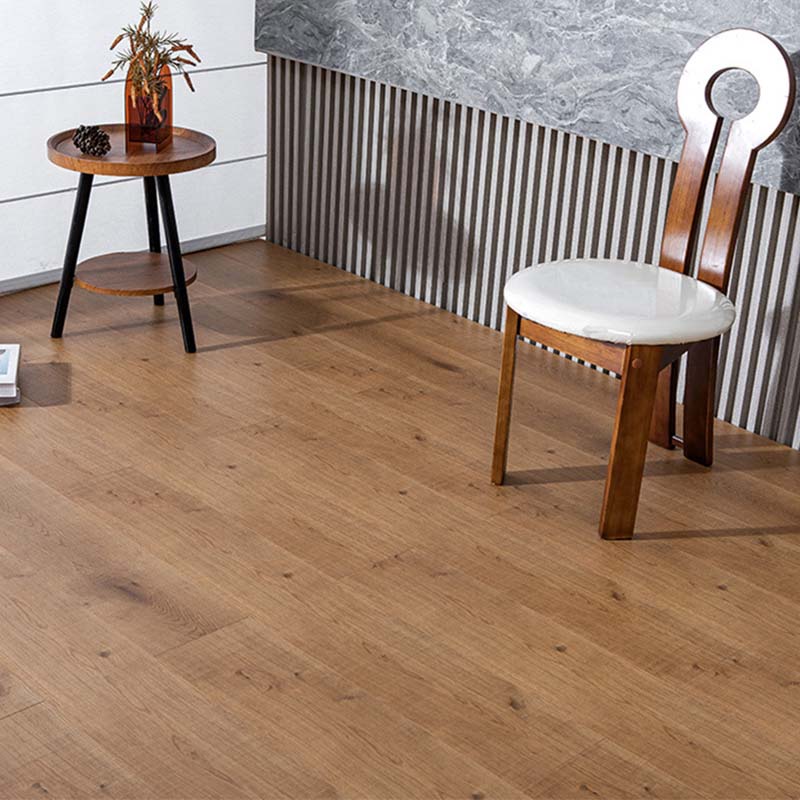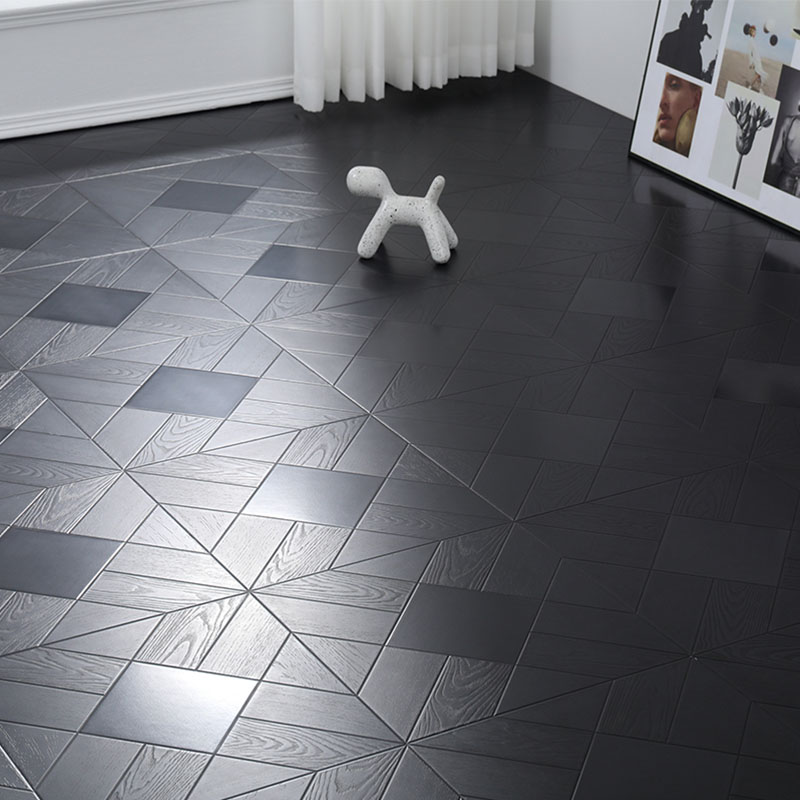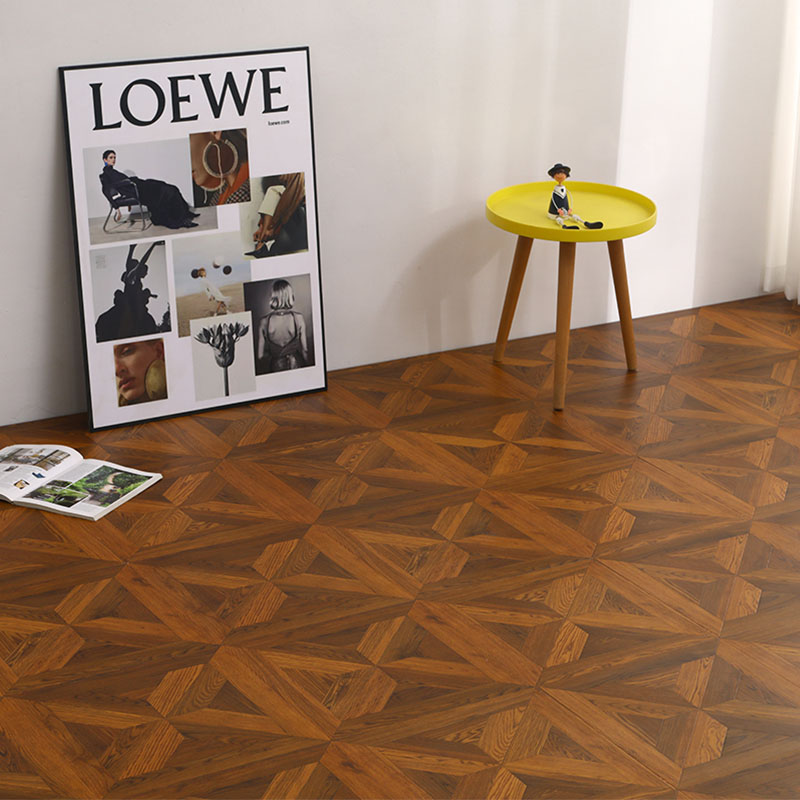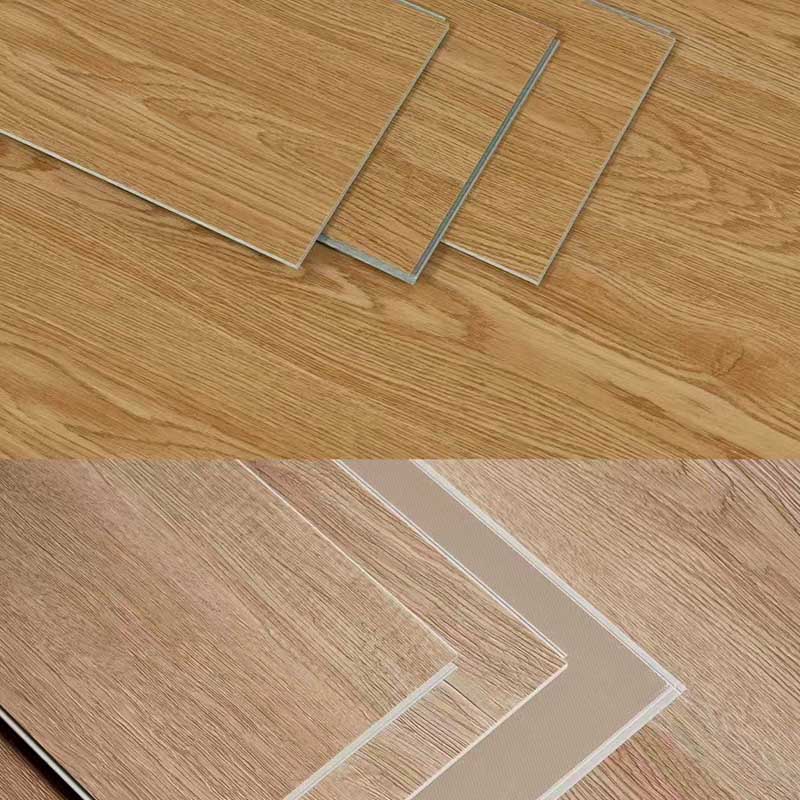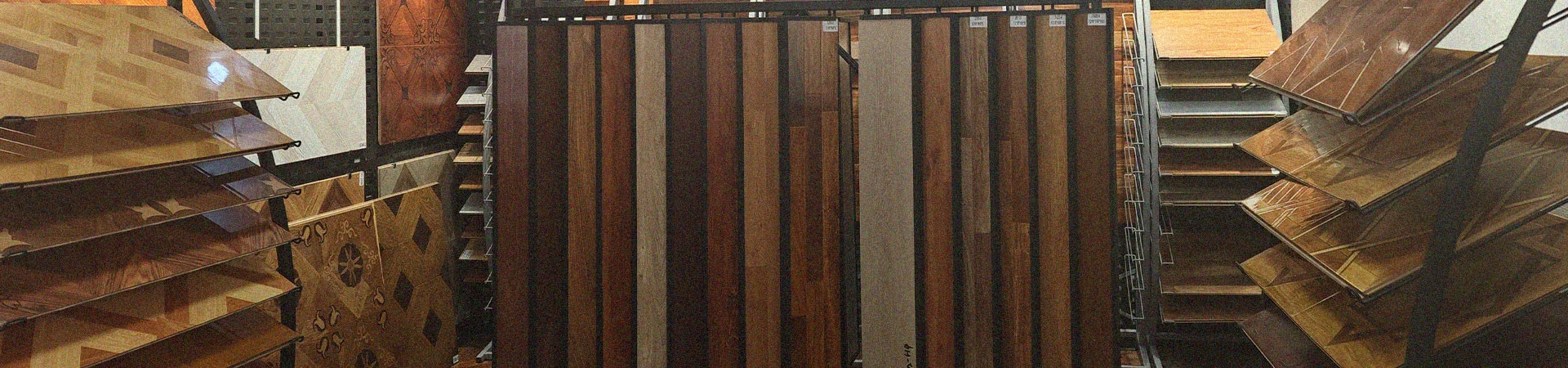
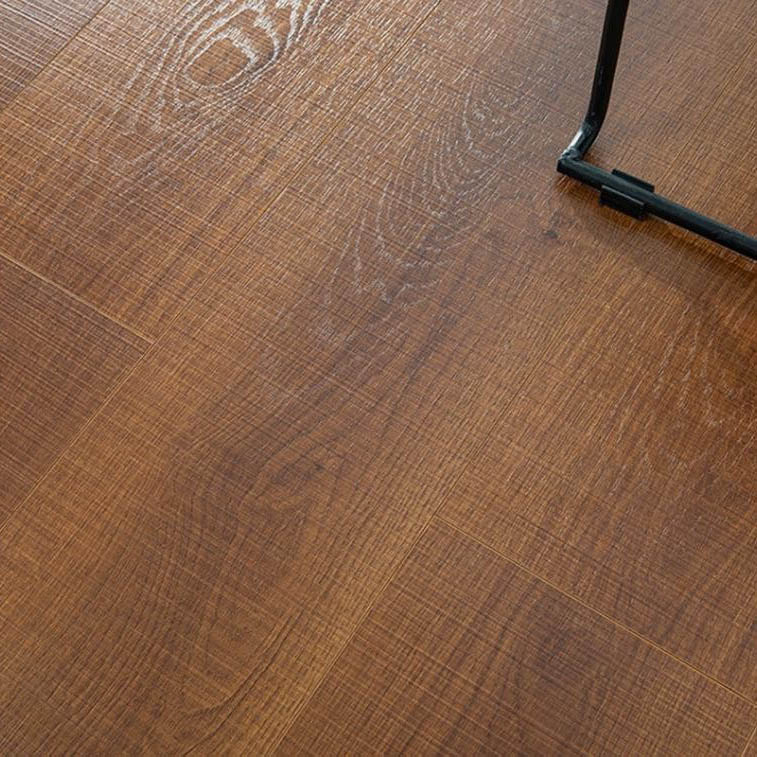
3D Embossed EIR Oak Laminate Flooring pairs an HDF core with an EIR surface where the embossing plate is registered against the printed oak grain — the relief follows the visible knots and grain lines rather than running an independent texture over the panel. Backed by measured performance data: core density 860 – 880 kg/m³, internal bonding strength ≥1.0 MPa, 24-hour water absorption expansion ≤2.5%, formaldehyde emission ≤0.124 mg/m³. Available in 8 / 10 / 12 mm and AC3 / AC4 / AC5 wear grades. Manufactured by Shandong Mingzun New Materials Co., Ltd. Request a sample and specification sheet.
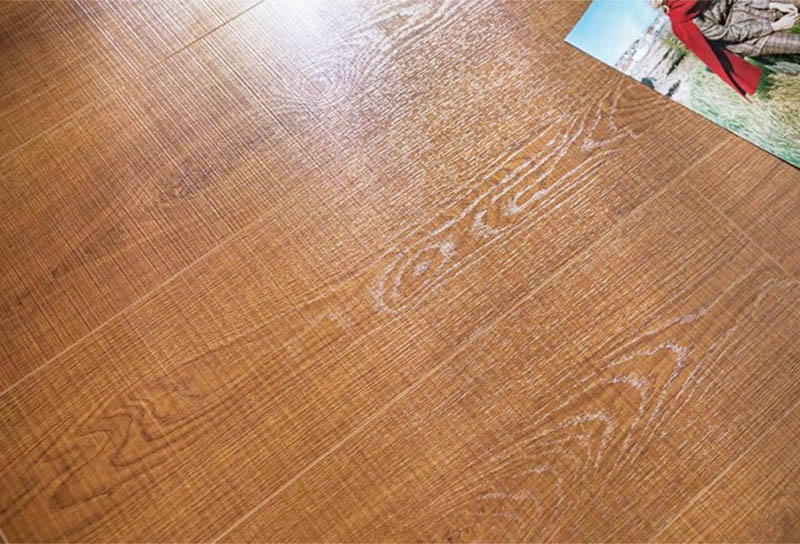
The word that carries the weight in this product name is registered. A standard embossed laminate presses a texture across the panel regardless of what the printed décor underneath is doing — the grain on the surface and the grain in the print drift in and out of alignment. On 3D Embossed EIR Oak Laminate Flooring, the embossing plate is registered to the decorative paper: where the printed grain runs, the relief runs; where the print shows a knot, the surface shows a depression. The visual result matters, but the sourcing question is different — whether that registration holds across production batches, not just on a single hand-held sample.
Technical values may vary according to the selected product structure and production specification. Test reports and detailed technical data are available for confirmed models.
EIR — Embossed-in-Register — coordinates the embossed surface texture with the printed decorative pattern. It is a production capability, not a décor style.
On an oak design, the surface relief follows the visible grain lines and knots instead of using an independent embossing pattern. The result is a surface that provides greater visual and tactile definition than a conventional flat decorative laminate — without giving up the standardised dimensions, installation efficiency and maintenance characteristics of laminate flooring.
The 3D surface can be produced in different oak tones and grain structures, allowing distributors and project buyers to select designs for contemporary, classic, Scandinavian or rustic interior styles from the same production line.
Each layer has a defined function. Removing one changes the performance — not just the cost.
Provides surface protection and helps maintain the appearance of the decorative finish during normal use. This is the layer that resists day-to-day surface dulling.
Melamine-based construction available in AC3, AC4 and AC5 grades. The grade is selected against the actual site traffic — not against the surface photograph.
High-definition printed paper reproducing oak grain, knots, colour variation and other wood visual effects. The EIR embossing is registered to this layer during pressing.
High-density fibreboard, 860 – 880 kg/m³, internal bonding strength ≥1.0 MPa. Provides the structural body of the plank and supports dimensional consistency through manufacturing and installation.
Balances the plank structure and supports dimensional stability across seasonal humidity and temperature shifts — the layer that keeps the board from arching over a full heating season.
Values below are the tested specification for this product. If your project requires a different threshold, confirm the applicable configuration with us before ordering.
Higher than the standard HDF range — supports precision click-profile machining and stable board geometry.
Measures how strongly the fibres in the core hold together. Below this figure the click profile tends to chip during machining.
Thickness swelling after a 24-hour immersion test. This is the figure to compare when comparing suppliers.
Climate chamber method. Meets E1 / E0 / Carb P2 — the applicable standards for most destination markets.
No visible damage to the decorative layer under the test load. Relevant for furniture movement and pet traffic.
≥35 MPa for boards ≤8 mm; ≥30 MPa for boards >8 mm. Measures the core's resistance to break under load.
Välinge click-lock system with wax sealing. Measured joint resistance to pulling apart under load.
Underfloor-heating compatible, with surface temperature ≤28 °C. Confirm the heating system parameters before specifying.
Registered embossing + 3D texturing + UV protective coating. Scratch-resistant and anti-yellowing.
Different projects have different traffic requirements. The appropriate grade should be selected against expected traffic, cleaning frequency, furniture movement and project requirements — not on wear grade alone.
Bedrooms, living rooms and general household use. The correct grade for standard residential interiors where the floor is not under continuous heavy traffic.
Offices, hotels and areas with increased foot traffic. The balance point between durability and cost for most commercial interiors.
Selected retail, hospitality and public interior projects. Specified where the floor sees continuous traffic through the working day.
The production workflow runs from incoming materials through to finished flooring. Each stage has its own inspection points — the finished product is not the first point of control.
HDF boards, decorative papers, wear-resistant materials and other major production materials are checked before entering production. Key factors including dimensions, moisture condition and appearance are reviewed against internal quality-control procedures.
The decorative layer, wear-resistant layer and HDF substrate are combined through controlled hot-pressing. EIR embossing creates the registered surface texture while the decorative pattern is positioned to maintain the required visual alignment.
Large laminated boards are processed into the specified plank dimensions. Edges are machined to form the required click-lock profile, with dimensional checks carried out during production.
The finished surface receives the specified protective treatment according to the product structure. Surface appearance, edge condition and texture consistency are inspected before the flooring proceeds to final inspection.
Finished flooring is checked for dimensional consistency, surface appearance, edge quality, locking performance and packaging condition. Additional performance testing can be arranged according to product grade, destination market or project requirements.
Five projects supplied from this production line, with the configuration used and the feedback recorded. Project details are shared with permission.
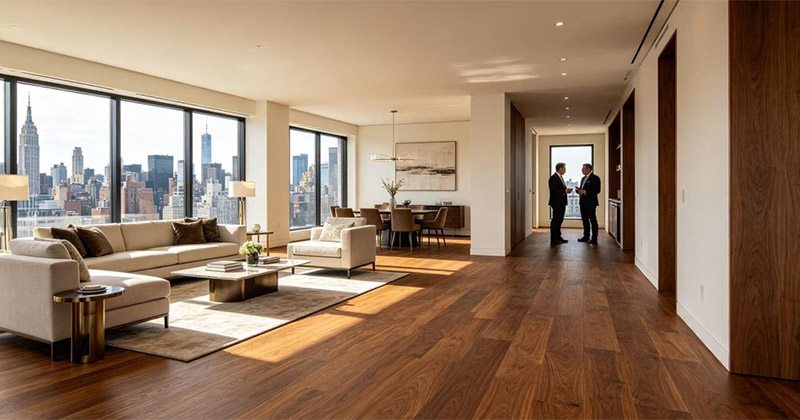
Customization covers the decorative appearance as well as the physical product configuration. For new decorative patterns, buyers can provide reference images, colour samples or design files for technical evaluation before mass production.
For an accurate quotation, provide the required thickness, plank dimensions, surface design, wear grade, quantity, packaging requirements, destination port and any applicable certification or compliance requirements.
For new decorative patterns, reference images, colour samples or design files allow us to evaluate feasibility before sampling — this avoids later cost adjustments caused by changes to the décor or surface structure.
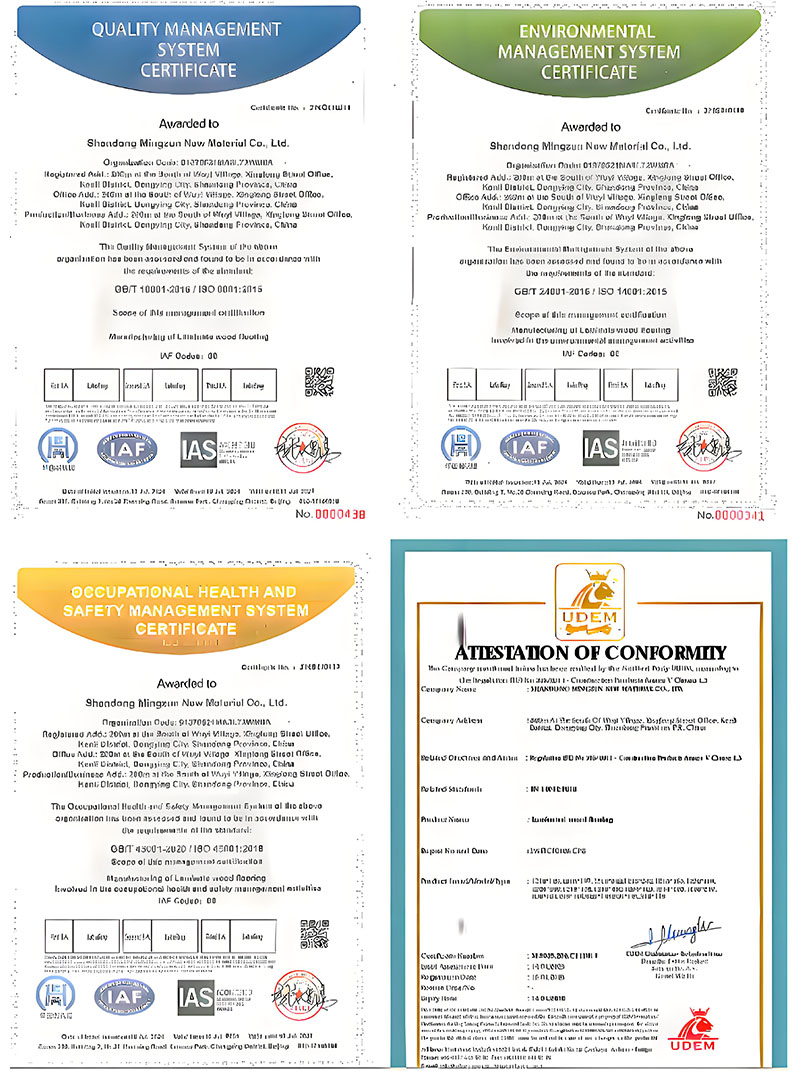
Certification scope and validity should be confirmed against current certificates and the specific flooring configuration before being used for a project, tender or market-compliance claim.
Each plank is protected with suitable inner packaging before being packed into export cartons. Packaging specifications can be adjusted according to product size, carton quantity, pallet requirements and transportation conditions.
For international orders, shipping documents can be prepared according to destination-market and customer requirements — including commercial invoices, packing lists, bills of lading and certificates of origin where applicable.
Standard production and customized orders are subject to different lead times. The final delivery schedule is confirmed according to product specification, order quantity, packaging requirements and production capacity.
Follow the manufacturer's installation instructions and local site conditions. The subfloor should be clean, dry and sufficiently level.
Questions that come up most often during the specification stage for EIR oak laminate flooring.
No. It is an HDF-based laminate flooring product. The EIR surface and high-definition decorative layer reproduce the visual and tactile characteristics of natural oak while using a manufactured multilayer flooring structure.
Conventional embossing may use a general surface texture, while EIR coordinates the embossed texture with the printed decorative pattern. This makes grain lines, knots and other wood details more visually consistent with the surface relief.
AC3 is commonly selected for residential applications. AC4 is suitable for residential and light commercial applications, while AC5 is generally considered for higher-traffic commercial environments. The final selection should be based on the project's traffic conditions and applicable flooring requirements.
It can be used with compatible underfloor heating systems when the flooring, underlay and heating system meet the applicable installation requirements. Surface temperature limits and installation procedures should follow the approved product instructions — the maximum surface temperature for this specification is 28 °C.
Yes. OEM and project customization can cover decorative patterns, colours, dimensions, surface textures, edge profiles, packaging and private-label requirements.
Yes. Samples can be provided for customers to evaluate colour, texture, surface finish, dimensions and overall product appearance before confirming a bulk order.
It is not recommended for areas exposed to prolonged water or continuous moisture. It may be considered for suitable dry areas adjacent to kitchens or bathrooms when site conditions and installation requirements are appropriate.
For an accurate quotation, provide the required thickness, plank dimensions, surface design, wear grade, quantity, packaging requirements, destination port and any applicable certification or compliance requirements.
A confirmed reference sample or approved production standard can be used for project orders. Decorative paper, surface texture and finished appearance are checked during production to reduce visible variation between batches.
Standard export cartons, private-label cartons, palletized packaging and customized packaging can be arranged according to the product specification and transportation requirements.
Depending on the product and destination market, we can provide product specifications, inspection records, packaging information, certificates and applicable test reports for customer review.
Confirm thickness, plank dimensions, surface design, wear grade, quantity and packaging requirements — we will confirm the product configuration, sample options and applicable technical documents before production. Contact us here.
Address
200 meters south of Wuyi Village, Xinglong Subdistrict Office, Kenli District, Dongying City, Shandong Province, China
Tel