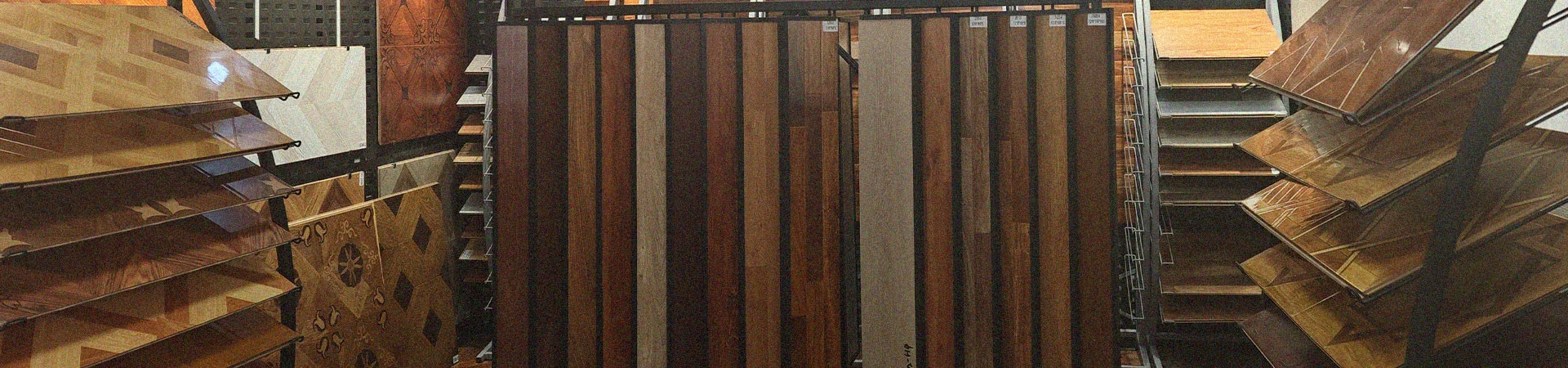
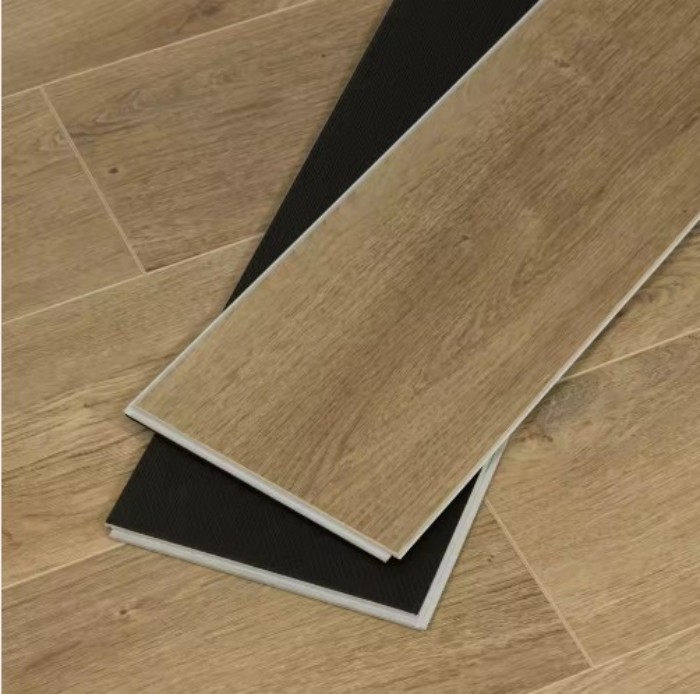
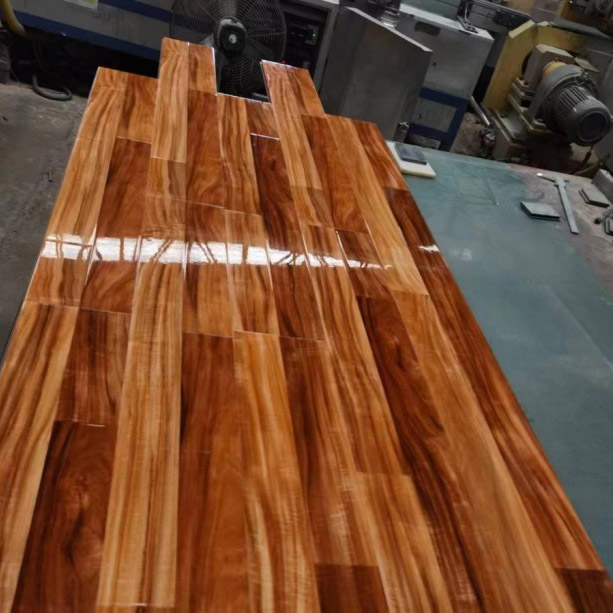
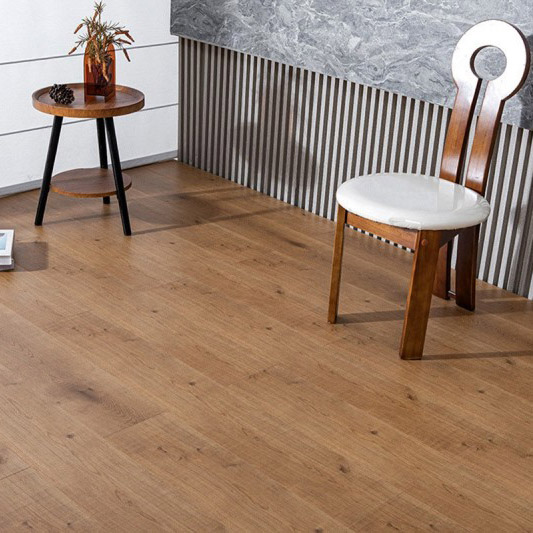
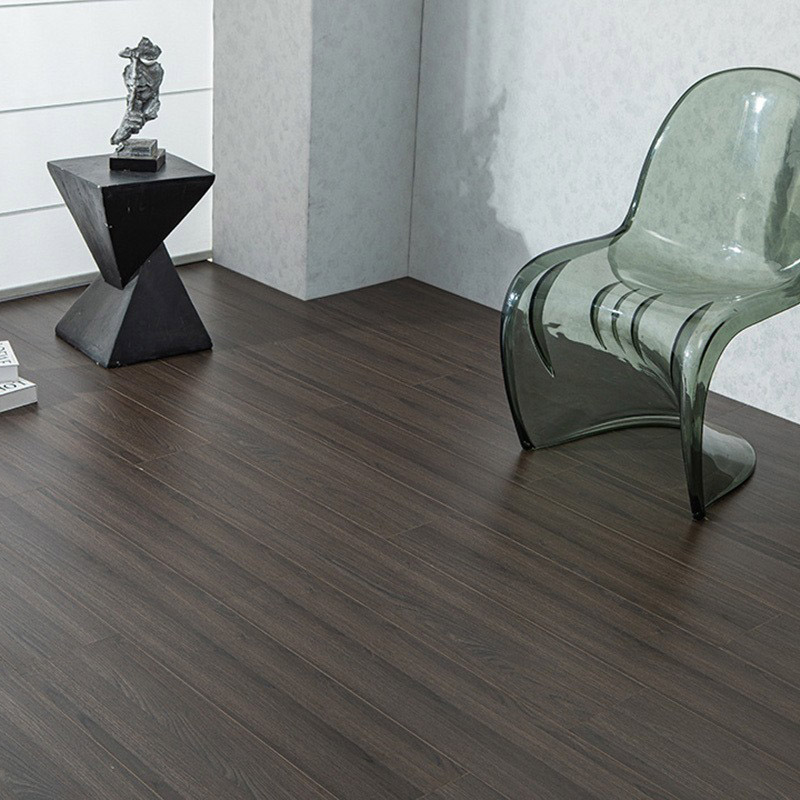
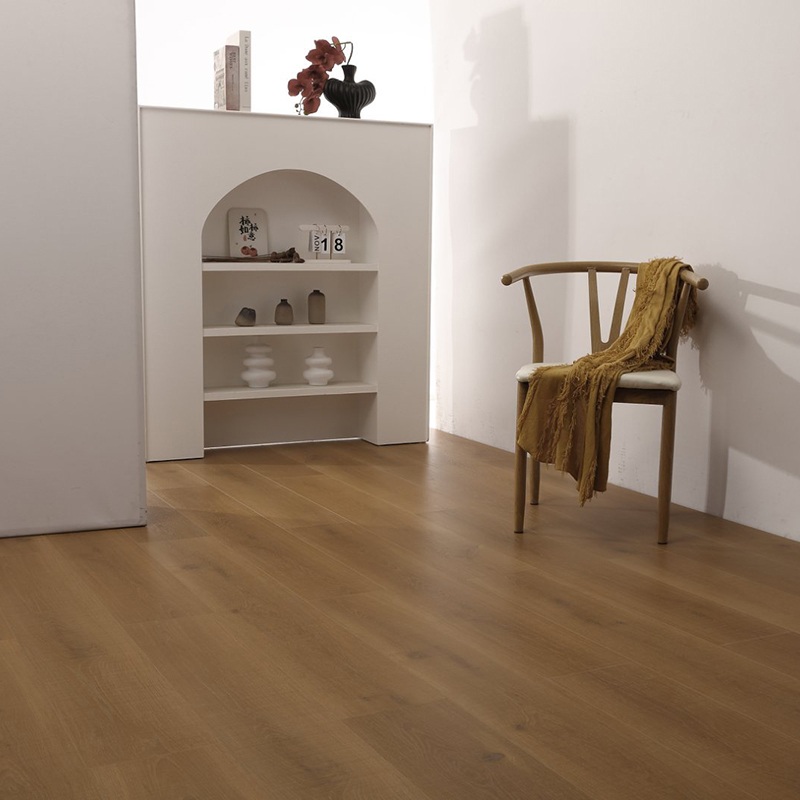
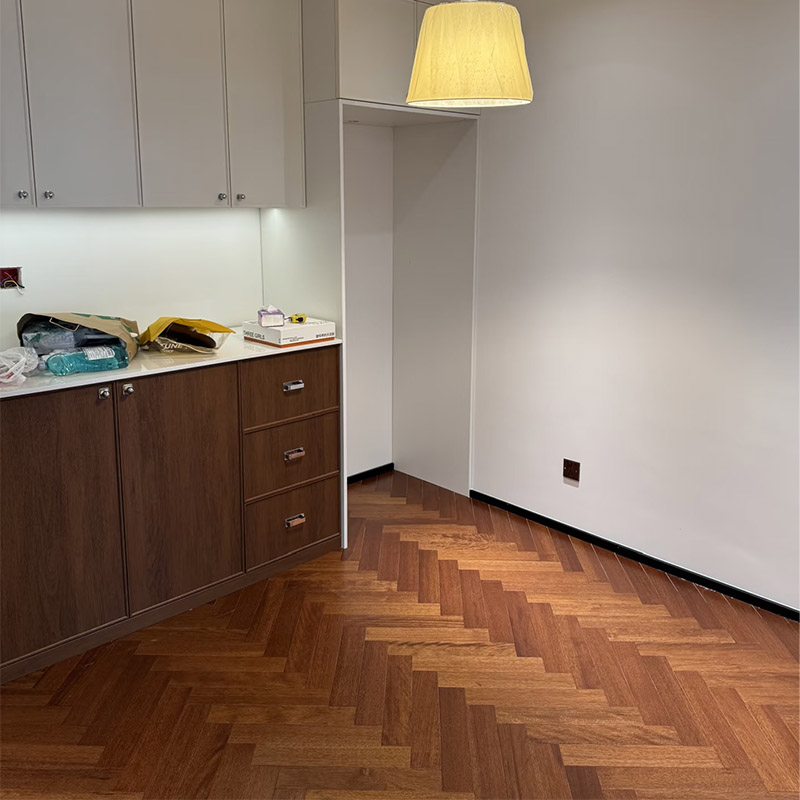
Solid wood flooring is milled from a single piece of timber — no core board, no adhesive sandwich, no composite layers. One piece of wood, 18–20mm thick, finished on the surface and fastened in place. That's the entire product.
It's also the most demanding flooring we sell. It moves with the seasons, it doesn't forgive a wet slab, and it will not work over underfloor heating in most climates. Buyers who understand those three facts love solid wood for twenty years. Buyers who don't end up filing complaints in year two. This page is written for the first group.
Wood Species — Picked by Hardness and Climate, Not by Photo
Janka hardness is measured in pounds-force required to embed an 11.28mm steel ball halfway into the wood surface. Higher isn't automatically better — very hard species chip more easily at the tongue and groove and are harder to nail without splitting. Here are the species we actually keep in stock, with real Janka numbers:
White Oak
Best seller
Straight grain with distinctive ray flecks on quarter-sawn boards. Dense enough to hold up in hallways and dining rooms, stable enough that most mills can kiln-dry it to 8–10% MC without case hardening. If you're only stocking one species, this is the one.
Black Walnut
Premium
Heartwood ranges from milk chocolate to near-black, with pale sapwood that some buyers want included and others don't. Softer than oak — it dents rather than scratches. Best for bedrooms and low-traffic rooms in climate-controlled interiors. Don't put it in a beach house.
Hard Maple
Very hard
Pale, uniform, minimal grain pattern. The hardness is a real advantage in gyms and dance studios. The trade-off: it moves more than oak across seasons and needs a stable indoor RH of 35–55%. If your customers run dry winter heating without humidification, expect gaps at the seams by February.
Teak
Humid climates
Natural oils make teak genuinely resistant to moisture, insects and rot — which is why it works in Southeast Asia and coastal markets where oak would fail. Plantation teak (from Indonesia and Brazil) is the version most buyers get today; natural forest teak still shows up in small quantities at very different pricing.
Okan (African Greenheart)
Value
One of the hardest species we stock. Grain is coarser and less refined than oak or walnut, colour runs olive-brown to reddish-brown with visible pores. At roughly half the price of walnut with nearly double the hardness, it's the honest choice for a rental or a high-traffic commercial floor where appearance is second to durability.
Birch
Budget
Hard enough for daily use and comfortable to walk on, but the least dimensionally stable species on this list. In dry climates it cups and gaps. In humid climates it crowns. We stock it because buyers ask for it, not because we recommend it for large open rooms. Use it in small areas or in homes with active humidity control.
Climate Reality — Where Each Species Actually Performs
The single biggest reason solid wood floors fail is not the species, the finish or the installer — it's the wrong species matched to the wrong climate. Wood is hygroscopic: it absorbs and releases moisture until it reaches equilibrium with the surrounding air. If the equilibrium moisture content (EMC) of your destination market swings more than 3% between summer and winter, the floor will move with it. Here's what we tell buyers before they choose:
❄
Continental — US Midwest, Eastern Europe, Northern China
Large RH swings between heated winters (RH 20–30%) and humid summers (RH 60–75%). Oak and maple handle this best because they respond to humidity changes slowly. Walnut and birch are riskier. Humidification in the home is not optional — it's the difference between a 20-year floor and a 5-year floor.
☀
Mediterranean & Dry — Spain, Italy, Southern US, Australia
Low average humidity but a fast dry season. Wood shrinks and gaps appear along the seams. Oak and teak are the safe choices. Installers should aim for a slightly higher installation MC (9–11%) so the boards have room to shrink without opening visible gaps.
🌧
Tropical & Humid — Southeast Asia, Gulf, Coastal Brazil
Year-round RH above 70%. Oak and maple will cup and eventually crack. Teak and Okan are the practical picks — teak due to its natural oils, Okan for its density and price. Never install solid wood over a slab without a proven moisture barrier and a slab MC reading below 2.5%.
Specifications
|
Product
|
Solid wood flooring, single-piece milled plank
|
|
Species
|
White oak, red oak, black walnut, hard maple, teak, Okan, birch — other species on request
|
|
Thickness
|
18mm standard / 20mm for wide planks (≥150mm) — thinner sections available on request
|
|
Width
|
90mm / 120mm / 150mm / 180mm — wider boards need wider expansion gaps and are more prone to seasonal movement
|
|
Length
|
300–1200mm random length, fixed-length available for premium projects
|
|
Grade
|
AB (select), ABC (natural), CD (rustic) — grade affects visible knots and colour variation, not durability
|
|
Surface Finish
|
UV-cured lacquer / natural oil / wood wax oil / unfinished (raw for on-site finishing)
|
|
Moisture Content
|
8–10% at packing, adjusted to destination-market EMC on request
|
|
Edge Profile
|
Tongue & groove (T&G) standard / click-lock for select engineered options
|
|
Installation
|
Nail-down over wood subfloor / batten (sleeper) system / full-spread adhesive over concrete — floating is not recommended for solid wood
|
|
Underfloor Heating
|
Not recommended. Solid wood insulates too well and dries out from the bottom. Use engineered wood or SPC if UFH is specified.
|
|
Formaldehyde
|
None added. Natural wood contains trace formaldehyde but well below E0 thresholds — test reports available.
|
|
MOQ
|
1 × 20GP. Mixed species and grades allowed up to 3 per container.
|
|
Packaging
|
Shrink-wrapped bundles, strapped and palletized. Custom carton printing available for OEM.
|
Three Installation Methods — and When Each One Applies
Solid wood is not a floating floor. It needs to be fastened. The method you specify determines how the floor performs for the next 20 years — pick it based on the subfloor, the building and the destination climate, not on which one the installer prefers.
01
Batten (Sleeper) System
50×50mm wooden battens laid at 300–400mm centres over a concrete slab, with a vapour barrier underneath. Planks are blind-nailed to the battens. This is the traditional method and still the best one for solid wood over concrete: it creates a drainage plane, decouples the wood from slab moisture, and lets air circulate underneath. The cost is height — you lose 60–80mm of ceiling clearance.
Use when: the subfloor is a ground-floor slab with no reliable moisture reading, or the building is older and the slab has no DPM.
02
Nail-Down over Wood Subfloor
The standard method in North America. Planks are blind-nailed at 45° through the tongue into plywood or OSB subfloor at 200–250mm intervals, with the last few rows face-nailed and filled. Fast, low-profile, and repairable — damaged boards can be cut out and replaced. The catch: it only works if the subfloor itself is flat (≤3mm over 2m), dry, and structurally solid.
Use when: the building has a wood-frame floor system — common in the US, Canada, Japan and Australia.
03
Full-Spread Adhesive over Concrete
The lowest-profile option. Planks are pressed into a full bed of MS polymer or silane-based adhesive over a properly prepared and tested slab. No height gain, no batten cost, and the wood stays put. The requirement is strict: slab MC below 2.5% (or 75% RH on a calcium chloride test), no sealer contamination, and adhesive coverage at 95%+ with no void pockets. Cutting corners here is how you get hollow-sounding floors and lifted planks in year one.
Use when: ceiling height is fixed, the slab is new and can be tested, and the client wants a flush transition to tile.
Maintenance — What the Floor Actually Needs, Year by Year
Year 0
After Installation
Keep the room at 18–24°C and RH 40–55% for the first two weeks. Don't run the heating high to "dry out" the floor — you'll crack the finish and open the seams. Move furniture in after 48 hours, felt pads on everything.
Year 1
First Seasonal Cycle
Expect gaps of 1–2mm at seams during the first dry season — this is normal. They close again in humid months. If gaps exceed 3mm, the indoor RH is dropping below 30% and you need a humidifier, not a floor replacement. Clean with a wrung-out mop only; no wet-mopping, no steam.
Year 2–3
Finish Refresh (if oiled)
Oil-finished floors need a maintenance coat every 18–24 months in living areas, sooner in kitchens. Lacquer-finished floors usually last 5–7 years before they need a screen-and-recoat. Recoating before the wear layer is breached costs a fraction of a full sand-back.
Year 5+
Deep Maintenance
A solid wood floor can be sanded and refinished 3–5 times over its lifetime, taking 0.5–1mm off the surface each time. This is the single biggest advantage over laminate and most engineered products — a 20-year-old solid oak floor can be brought back to looking new for a fraction of replacement cost.
What Solid Wood Won't Do
We sell this product. We also turn down orders for it. Here is when solid wood is the wrong choice and we'll tell you so:
✕
Over underfloor heating
Solid wood insulates too well and dries from the bottom. It cracks, cups and pulls away from the fasteners. If UFH is already installed, specify engineered wood or SPC instead — we'll sell you that.
✕
In basements or below-grade rooms
Slab moisture vapour moves upward year-round. Even with a barrier, the risk of cupping in a below-grade room is too high. Solid wood is for above-grade, climate-controlled spaces.
✕
In bathrooms, laundry rooms, kitchens with floor drains
No exceptions. Water on the surface is fine; water that reaches the tongue and groove from below is not. This is a SPC application.
✕
In commercial spaces with rolling loads
Retail carts, hospital beds, rolling chairs with hard casters — solid wood dents permanently under point loads. Use laminate AC4/AC5 or SPC commercial grades.
✕
For buyers who want a maintenance-free floor
Solid wood is not maintenance-free. It needs humidity control, periodic finish attention, and careful cleaning. If that's not a conversation your customer wants to have, they should buy laminate or SPC.
✕
For projects with tight budgets and no margin for humidity control
A solid floor installed in a building without RH control will fail — not because of the product, but because of the environment. Honest answer: don't sell it.
What We Provide
01
Samples
A4 board samples free of charge; buyer covers courier (typically $30–50 via DHL, 5–7 days). Courier cost is credited against the first bulk order.
02
Packing
Samples ship in bubble wrap and rigid cartons. Bulk orders use sea-worthy shrink-wrapped bundles on pallets, strapped and corner-protected. Custom carton printing available for OEM orders.
03
Shipping
Buyer can nominate a freight forwarder or we can recommend one from our usual partner list. We prepare all export documentation and supervise loading with photos before the container seals.
04
Production Tracking
One person assigned per order from deposit to container seal. Weekly progress photos, batch numbers recorded, moisture content logged per batch.
05
Installation Support
Installation diagrams and step-by-step video provided in English. For large projects, we can arrange for a technical contact to walk your installer through the layout via video call.
06
OEM / ODM
Custom species selection, custom grades, custom widths, custom finishes, custom packaging. Brand coding and carton design included — no separate design fee for repeat orders.
Questions From Buyers
What's the difference between solid wood and engineered wood, in one sentence?
Solid wood is one piece of timber all the way through; engineered wood is a thin real-wood top layer glued onto a plywood or HDF core. Solid is more expensive, more dimensionally unstable, and can be sanded and refinished 3–5 times over its life. Engineered is more stable in humidity swings, works over UFH in some builds, and can typically only be sanded once or twice. Neither is "better" — they fit different jobs.
Can you match a specific stain colour from a photo or sample?
Yes — for a bulk order, send us a physical reference board or a stained sample. We'll match with UV-cured lacquer or wood wax oil and send back a trial board for your approval before running the full batch. Colour match by photo alone is unreliable; the same stain on oak and on maple produces a visibly different result because the base tone of the wood shows through.
Do you kiln-dry to destination-market moisture content?
We kiln-dry to 8–10% MC as standard. If your market needs a different target — for example, 6–8% for very dry inland US or 12–14% for humid Southeast Asia — tell us the destination port city and we'll adjust the final kiln cycle. This costs nothing extra but does add 2–3 days to production time.
Why won't you sell me solid wood for underfloor heating?
Because it will fail, and then you'll have an unhappy customer, and then you'll have a warranty claim that neither of us wants. Solid wood insulates from below, dries out, shrinks, cups and pulls off the fasteners within 2–3 heating seasons. Engineered wood with a stable core can survive it in some builds. SPC was designed for it. We'd rather sell you the right product and keep you as a customer for the next ten years than sell you the wrong one and lose you after one.
What grade should I order — AB, ABC or CD?
-
AB (Select): uniform colour, minimal knots, no visible defects. Premium residential and hospitality projects.
-
ABC (Natural): some colour variation and small knots. Best value for most residential projects — the pattern variation actually looks more natural once installed.
-
CD (Rustic): visible knots, dark mineral streaks, noticeable colour range. Strong character look; also the most cost-effective. Popular for chalets, restaurants and industrial-style interiors.
Grade affects appearance only. Durability depends on species and installation, not on grade.
How long from deposit to container ready?
Standard species in stock: 20–25 working days. Custom species, custom widths or colour matching: 30–40 days. Chinese New Year adds roughly 2 weeks to any schedule — we flag this at the quote stage, not after you've paid.
What's your MOQ and can I mix species in one container?
MOQ is one 20GP. You can mix up to 3 species or grades per container without extra charge, as long as each individual batch is at least 200㎡. Smaller quantities are possible on trial orders — talk to our sales team before you place.
Send us your project and we'll tell you straight whether solid wood fits.
Destination city, room type, subfloor and whether UFH is installed — that's all we need to give you a real answer.
Replies within 12 working hours. Samples ship within 48 hours.