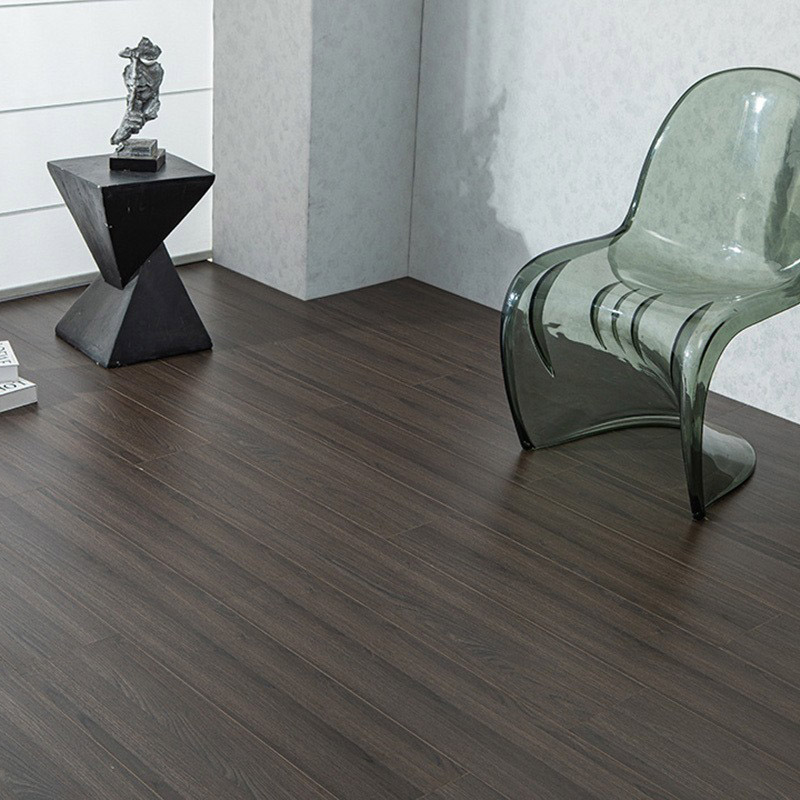
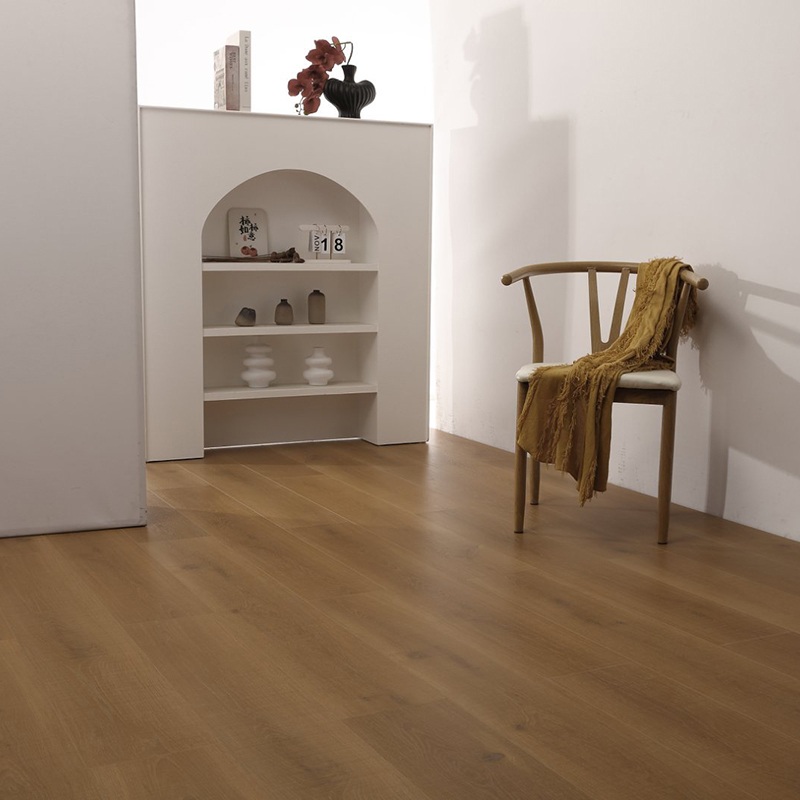
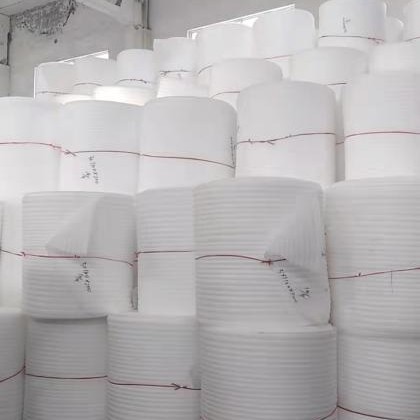
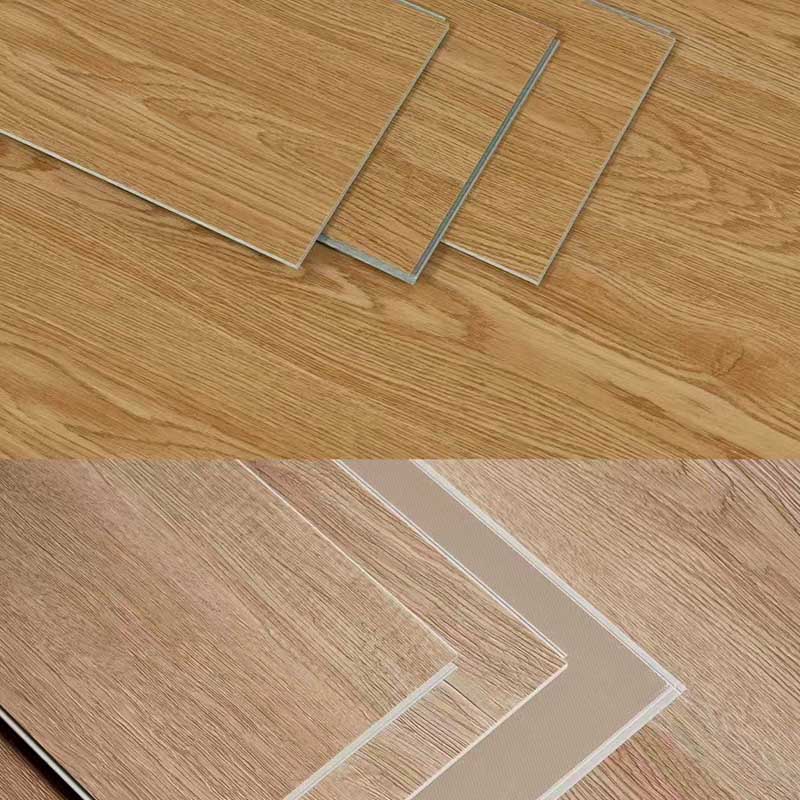
Flooring Underlayment is the layer nobody sees and everybody notices. It's the 1–3mm foam between your subfloor and the laminate plank — and it decides three things: how quiet the floor is, how it feels underfoot, and whether moisture from below ever reaches the plank core.
We produce three materials at our Dongying plant: EVA, IXPE, and EPE. They look similar in a sample book and behave completely differently after two years under a sofa. This page explains which one goes where, and which one we'd talk you out of if you asked.
Laminate plank 7 – 12 mm
Underlayment 1 – 3 mm
Subfloor concrete / plywood
Three Foams — What Actually Separates Them
The difference isn't colour or brand. It's the foam structure — open cell vs closed cell, cross-linked vs not — and that structure determines how the material behaves under compression, over time, and in a humid basement.
EVA Ethylene-Vinyl Acetate
Budget choice · 90% of residential orders
EVA is the cheapest underlayment we make and the one we ship most. Open-cell structure, density around 25–35 kg/m³, and available in more colours than any other foam we produce — which matters if the edge is going to be visible during installation or in a floating floor with a glass transition strip.
The honest limitation: EVA compresses permanently under load. Under a dining table, a piano, or a heavy sofa, a 2mm EVA pad becomes less than 1mm within 2–3 years. The floor stays flat, but the acoustic benefit fades and the underfoot feel gets noticeably harder. For bedrooms and rental turnovers, this is fine. For a living room with heavy furniture, it isn't.
-
Density25 – 35 kg/m³
-
Thickness1 / 1.5 / 2 / 3 mm
-
Impact noise reductionΔLw ≈ 18 – 19 dB
-
Moisture barrierOptional PE film
-
Compression recoveryLow
-
Best forBedrooms, rentals, budget projects
IXPE Irradiation Cross-linked PE
Premium choice · worth it in most living spaces
IXPE is the same base polymer as EPE, but the foam is cross-linked by electron beam irradiation before expansion. That single extra step changes everything: the cell walls become chemically bonded, so the foam doesn't tear, doesn't compress flat, and doesn't degrade with age. Density runs 33–45 kg/m³ — noticeably higher than EVA — and it shows underfoot the first time you step on it.
We also produce IXPE with an attached laminate pad — the foam is factory-bonded to a PE film or an acoustic membrane, so the installer rolls out one layer instead of two. This cuts install time by roughly 20% on a 100㎡ job. The trade-off is that attached-pad rolls come in fewer thickness options than plain IXPE.
-
Density33 – 45 kg/m³
-
Thickness1 / 1.5 / 2 / 3 mm
-
Impact noise reductionΔLw ≈ 20 – 22 dB
-
Moisture barrierBuilt-in on most specs
-
Compression recoveryHigh — recovers to 95%+
-
Best forApartments, offices, living rooms with heavy furniture
EPE Expanded Polyethylene
Lightweight · thermal and commercial use
EPE sits between EVA and IXPE. Not cross-linked, so it compresses more than IXPE under load, but the closed-cell structure keeps it much more water-resistant than open-cell EVA. Density is typically 28–35 kg/m³ and the rolls are noticeably lighter than IXPE — a full 100㎡ roll is around 3–4 kg, which matters on big commercial installs where installers carry rolls up multiple flights.
Where EPE actually wins is thermal insulation. Its cell structure traps air more effectively than EVA, giving it the best thermal resistance of the three — the reason it's our go-to for over-slab installs in cold climates. The PE film version adds a bonded 0.05–0.10mm moisture barrier, which is what you want over a concrete slab without a separate DPM.
-
Density28 – 35 kg/m³
-
Thickness1 / 2 / 3 / 5 mm
-
Impact noise reductionΔLw ≈ 19 – 20 dB
-
Moisture barrierPE film version standard
-
Compression recoveryMedium
-
Best forCold-climate slabs, commercial, large areas
Performance Side by Side
Six properties that actually matter for spec decisions. Scores are relative across our own three products — not against other manufacturers.
EVA IXPE EPE Cost row is inverted — lower bar = lower cost per m².
Choosing by Thickness
Thicker is not automatically better. Above 3mm, the Laminate Underlayment becomes soft enough that click-lock joints flex under load — which is the leading cause of seam failure on cheap laminate. Our recommendations:
1.0 mm
The default for click-lock laminate
What most European manufacturers specify in their warranty terms. Thin enough that the click joint stays rigid, thick enough to absorb minor subfloor irregularities. If you're only stocking one thickness, this is it.
EVA · IXPE
1.5 – 2.0 mm
Better acoustics, still safe for click systems
The sweet spot for apartments and multi-unit buildings where impact noise is regulated. Add 1.5mm IXPE under a 8mm AC4 plank and you'll typically gain 2–3 dB of impact noise reduction over 1mm EVA — enough to matter in a building with a noise clause.
EVA · IXPE · EPE
3.0 mm
Maximum for click-lock — go no higher
We stock it and it sells, but we tell buyers it's the ceiling. Above 3mm, the plank-to-plank joint starts flexing noticeably when walked on, and in a warm room the click tabs can disengage over time. If a supplier offers you 5mm for a click floor, ask them what their warranty says.
EVA · IXPE · EPE
5.0 mm
For glue-down and engineered floors only
EPE only, in our range. Bonded under engineered wood or a glue-down vinyl, it delivers real acoustic performance because the plank is fully supported. Never specify this under click-lock laminate — that combination returns as a complaint in 90% of cases.
EPE
Which Underlayment Goes Where
Second-floor apartment, noise-sensitive building
IXPE 1.5–2 mm with attached pad
The extra density is what buys you the dB. Attached pad saves install time and eliminates the possibility of the installer forgetting the moisture film.
Basement or over-slab, no existing DPM
EPE with PE film · 2 mm
Closed-cell structure resists upward moisture vapour better than EVA, and the bonded PE film gives you a proper vapour barrier in one pass.
Bedrooms and rental turnover
EVA 1 mm
No heavy furniture, no acoustic requirement beyond normal. EVA does the job at the lowest cost, and its wide colour range is useful if the edge is visible.
Underfloor heating with laminate
IXPE 1 mm · low thermal resistance
Don't overspec here. Every extra millimetre of foam sits between your heating pipe and the room. 1mm IXPE is the right compromise between acoustic benefit and heat transfer.
Large commercial install, 500㎡+
EPE 2–3 mm
Weight and roll size matter on big jobs. EPE rolls are roughly 40% lighter than IXPE per square metre — the difference between two installers carrying rolls up a stairwell and four.
Cold climate, ground-floor slab
EPE 3 mm
Best thermal resistance of the three materials. Reduces the "cold floor" sensation on bare feet in winter without needing underfloor heating.
Specifications
Materials EVA · IXPE · EPE · EPE with bonded PE film
Thickness 1 mm / 1.5 mm / 2 mm / 3 mm / 5 mm (EPE only)
Roll sizes 100 sqft (9.3 ㎡) / 200 sqft (18.6 ㎡) / custom
Width 1000 mm / 1200 mm
Moisture barrier Optional on EVA · standard on most IXPE · PE film on EPE-F
Attached pad option Available on IXPE and EPE
Colours EVA in 12 colours · IXPE in 4 · EPE in 2 (white, black)
Fire rating B1 (GB 8624) / Bfl-s1 (EN 13501-1) available
Formaldehyde None — no resin binder in the foam
MOQ 500 ㎡ per material per thickness · mixed materials allowed in one container
Packaging Shrink-wrapped rolls, palletised. Custom label printing available.
Questions From Buyers
Can I use Laminate Underlayment to fix an uneven subfloor?
No, and this is the most common misconception we hear. Underlayment absorbs minor irregularities — up to about 1mm over 1m. It does not level a floor. If your subfloor has 5mm dips or a noticeable slope, you need a self-levelling compound or a plywood overlay first. Rolling out extra-thick foam to hide a bad slab is how you get a floor that clicks underfoot and separates at the seams in year two.
Is thicker underlayment always better for soundproofing?
Not for click-lock laminate. There's a hard ceiling at 3mm — above that, the click joint flexes under body weight and the floor can start to disengage. If your client needs serious impact noise reduction, the answer is a dedicated acoustic membrane under a glue-down floor, not a thicker foam under a click plank. For floating laminate, 2mm IXPE is the practical acoustic maximum we recommend.
Do I need a separate moisture barrier over concrete?
Depends on the slab. If it's a new slab with a proper DPM underneath, a PE-film version of EPE or a moisture-barrier IXPE is enough. If it's an older slab with no DPM and you can't confirm the moisture reading, test it with a calcium chloride kit first — under 3 lbs/1000 sqft per 24h and you're fine with a standard barrier; above that and no underlayment will save you. You need a surface DPM.
Can I use underlayment with underfloor heating?
Yes, but keep it thin. Every millimetre of foam sits between the heating pipe and the room, so a 3mm pad noticeably slows the response time. We recommend 1mm IXPE for UFH — enough to smooth minor surface irregularities and give a little acoustic benefit, without turning your heating system into an expensive electric blanket.
Is the attached-pad version worth the extra cost?
It depends on the size of the job. On a 30㎡ bedroom, the time saving is about an hour and the extra cost is minimal — not really worth it. On a 500㎡ commercial install, an attached pad cuts a full day off the labour, and it removes the risk of the installer forgetting the moisture film on one section of the floor. That's worth the premium.
Does your underlayment contain formaldehyde or VOCs?
No. These are physical foams — no resin binder, no formaldehyde. We still test every batch for VOCs because "shouldn't have any" and "doesn't have any" are different claims. Test reports available on request.
What's the MOQ and lead time?
500 ㎡ per material per thickness. You can mix EVA, IXPE and EPE in one container without extra charge. Standard specs ship in 12–18 working days after deposit. Custom colours or custom roll widths add 5–7 days. We keep 1mm and 2mm IXPE in stock year-round because those are the two fastest-moving specs.
Tell us the subfloor, the floor above it, and the acoustic requirement — we'll spec the right one.
Underlayment is where most laminate complaints start. Getting it right costs almost nothing extra; getting it wrong costs a full replacement.
Replies within 12 working hours. Samples ship within 48 hours.